There are many beautiful places in the world. But not every place allows you to slow down enough to hear yourself.
Nepal does — quietly, almost without trying.
This intimate Himalayan journey is not about traveling far. It is about entering a different relationship with time, space, and attention. And Nepal naturally invites that shift. Generally, a place is defined by its people, and Nepal is widely renowned for friendly, charming individuals who make authentic human connections possible.
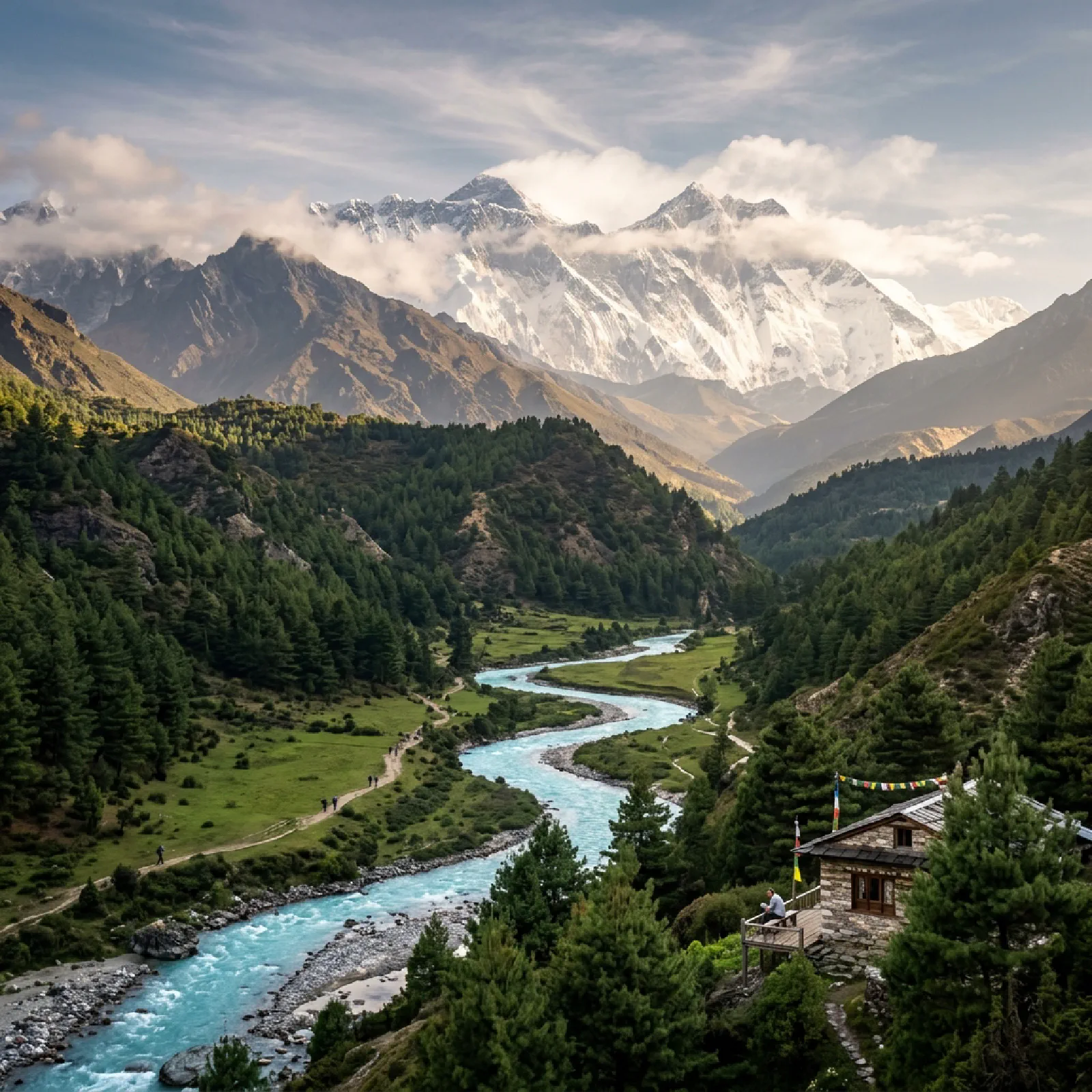
The unhurried flow of a Himalayan valley, where the landscape sets the pace.
A Different Relationship with Time
In much of the modern world, time moves forward like an instruction. Schedules. Notifications. Deadlines. Efficiency. Calendar. Time is something to manage.
In Nepal, time behaves differently.
Buses leave when they are ready. Tea takes as long as conversation lasts. A walk through a village may become an hour because someone invites you to sit, and no one feels the need to hurry away. Nothing here is optimized — and strangely, that becomes a profound relief.
You begin to notice how much of your life has been measured rather than lived. Days stretch. Moments widen. You stop asking “What’s next?” and begin asking “What is here?”
Reflection does not happen because we force it. It happens when time stops pushing us forward.
Mountains and Psychological Space
Mountains do something subtle to the human mind. They do not demand attention. They simply remain.
In the Himalayas, scale changes your inner dialogue. Problems that felt urgent begin to loosen. Thoughts slow down, not because you try to meditate, but because the landscape itself holds an immense silence. There is space between sounds. Space between conversations. Space even between thoughts.
Many guests notice this without knowing why: they begin speaking more slowly, listening more deeply, needing less explanation. The mountains do not solve your questions. They make room for them.
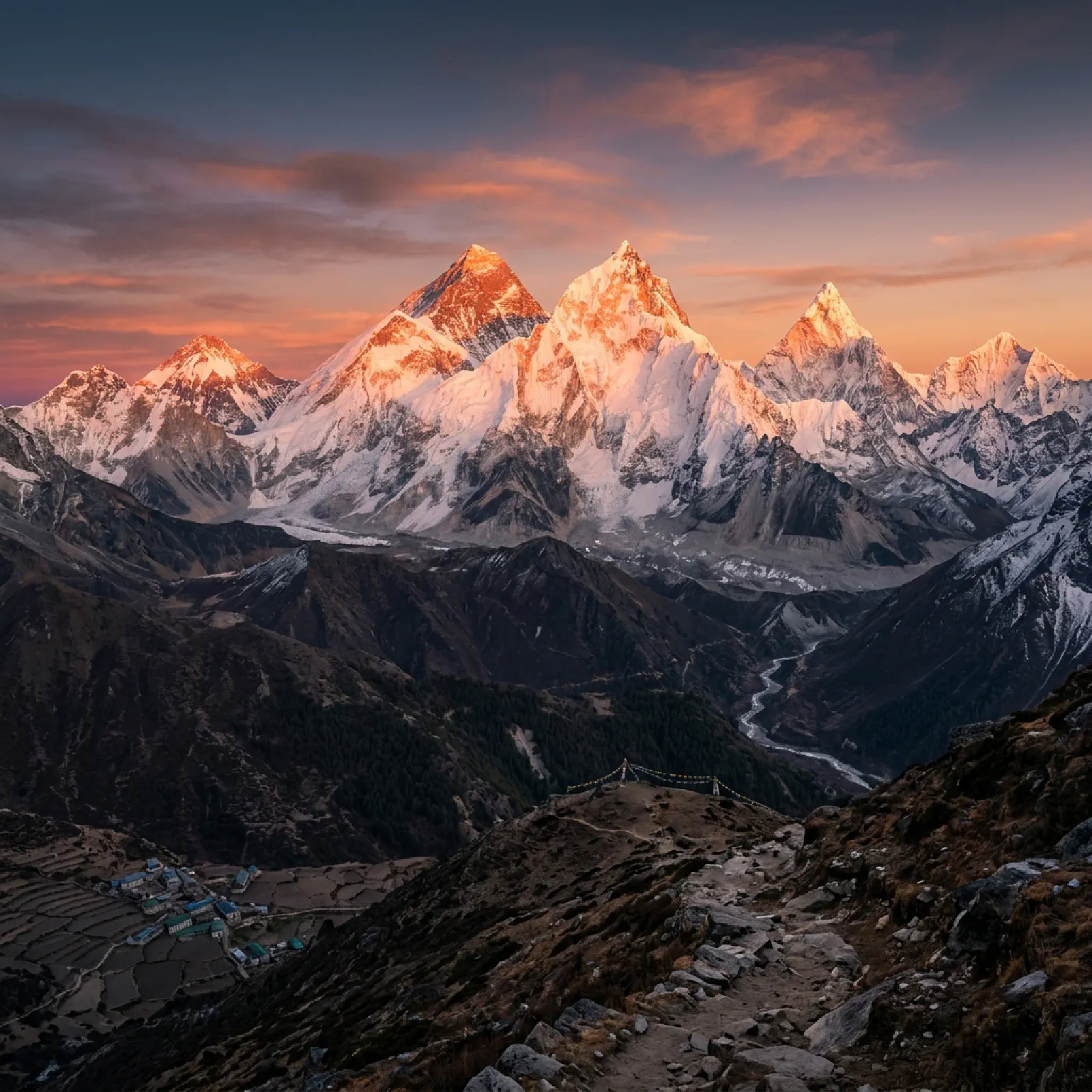
Immense silence held by the highest peaks on earth.
Slowness as a Way of Seeing
Modern travel often tries to show you everything: more destinations, more experiences, more photographs. But reflection requires the opposite — fewer places, deeper presence.
During this slow travel Nepal experience, journeys unfold deliberately: a long drive through changing landscapes, tea shared without agenda, walking without needing to arrive anywhere important. Slowness is not inactivity. It is attention returning to its natural pace. When nothing urgent is happening, something meaningful often begins.
A Local Perspective
Hosting this journey is not about showing Nepal as a static destination. It is about sharing a way of being shaped by this place.
We travel not as tourists moving rapidly through scenery, but as guests moving gracefully through lived spaces — villages, roads, kitchens, conversations. And somewhere along the way, surrounded by this quiet luxury travel Nepal provides intuitively, many people notice something unexpected:
They are no longer trying to become someone else. They are simply returning to themselves.
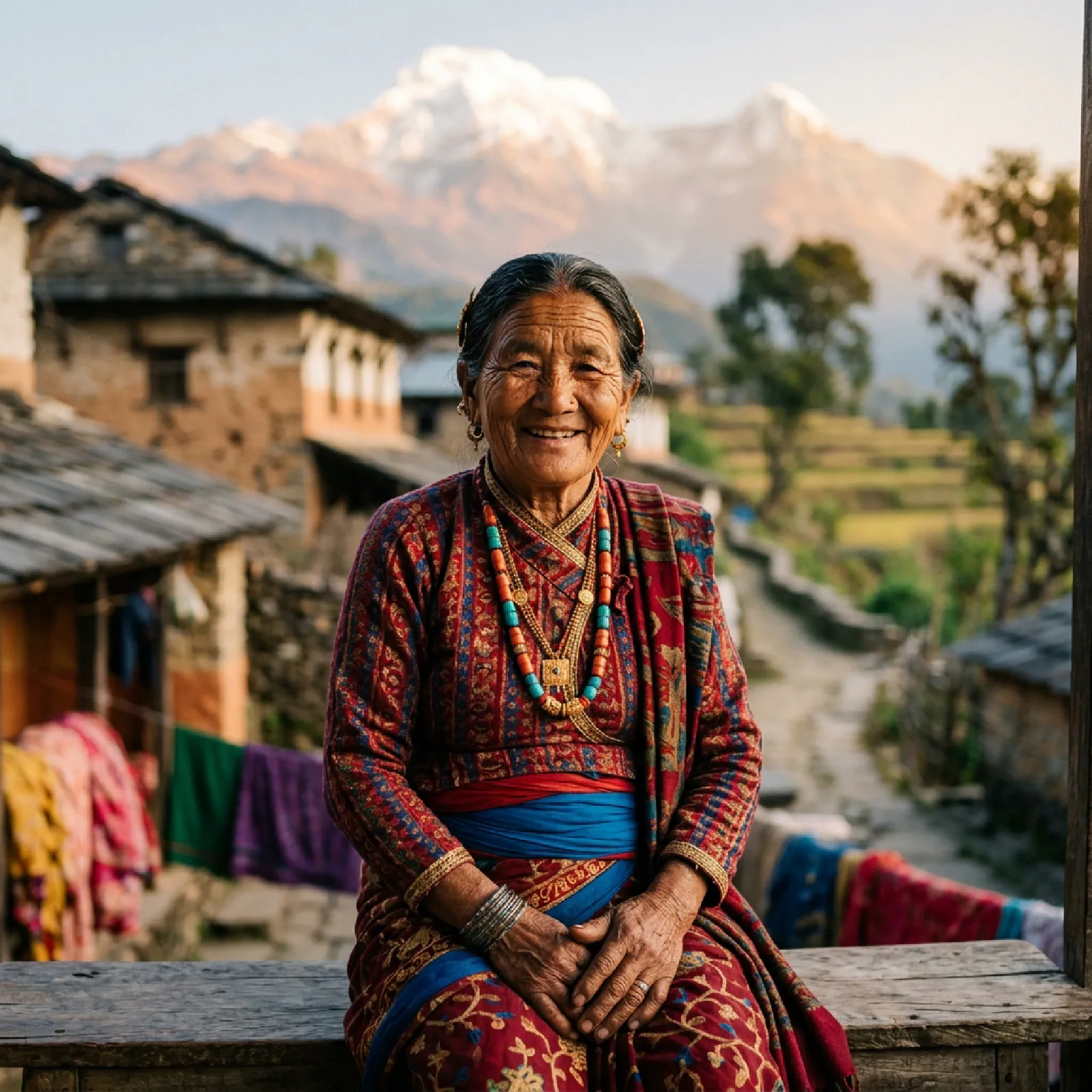
Hospitality that feels like a shared breath, quiet and sincere.
The Sensory Experience
Beyond the silence and the scale, Nepal is felt in the senses. The smell of woodsmoke and cedar. The taste of a shared meal that arrived without haste. The tactile warmth of a copper cup of tea.
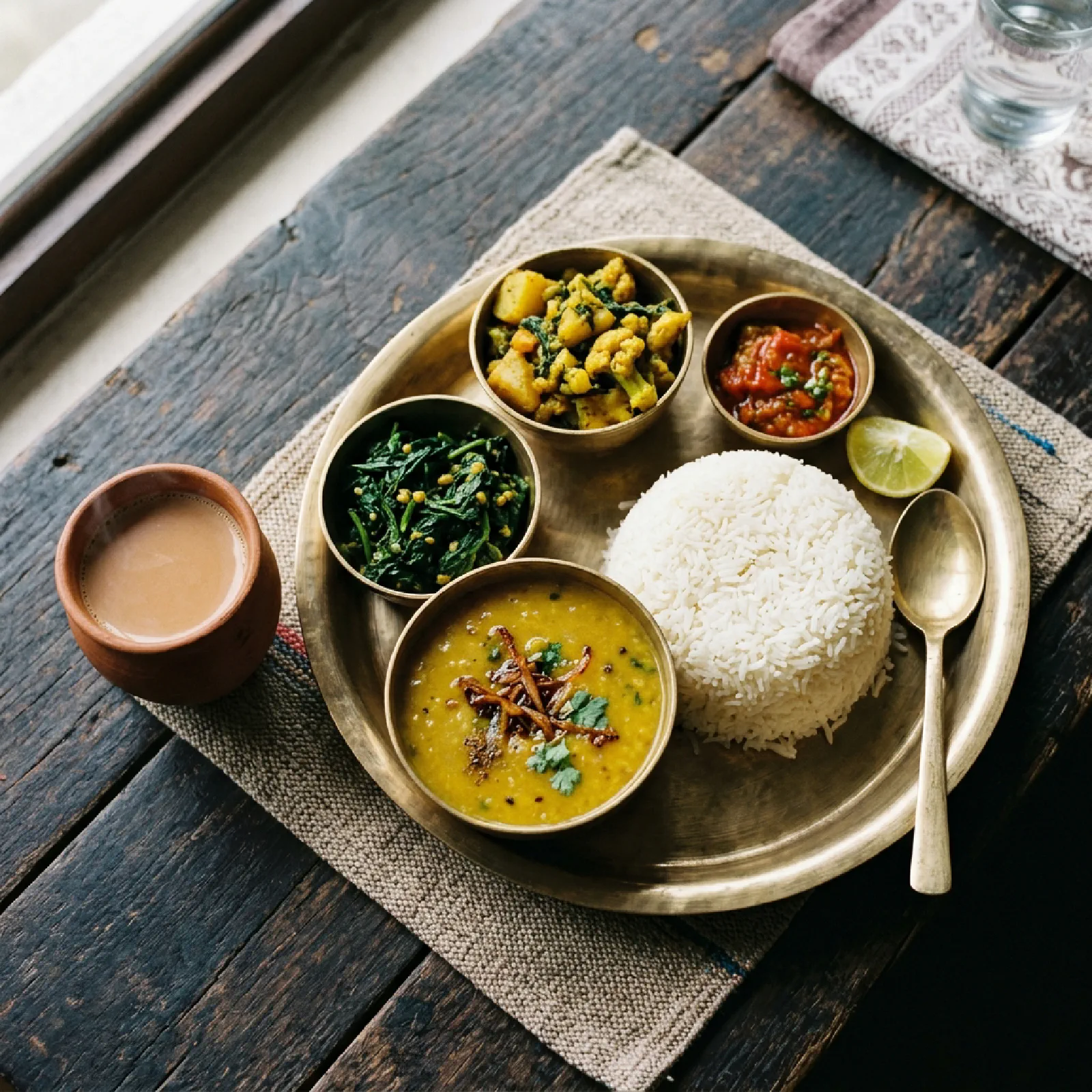
Dal Bhat — nourishment refined to its essentials.
Why Reflection Happens Here
Nepal does not promise magical transformation. It offers the exact conditions where transformation can quietly occur:
- Time that breathes
- Landscapes that humble thought
- People that smile and acknowledge you genuinely
- Cultures comfortable with stillness
- Journeys without constant performance
Nothing is forced. Conversations and ideas are deeply shared. And often, that is exactly what allows something real to finally emerge.